

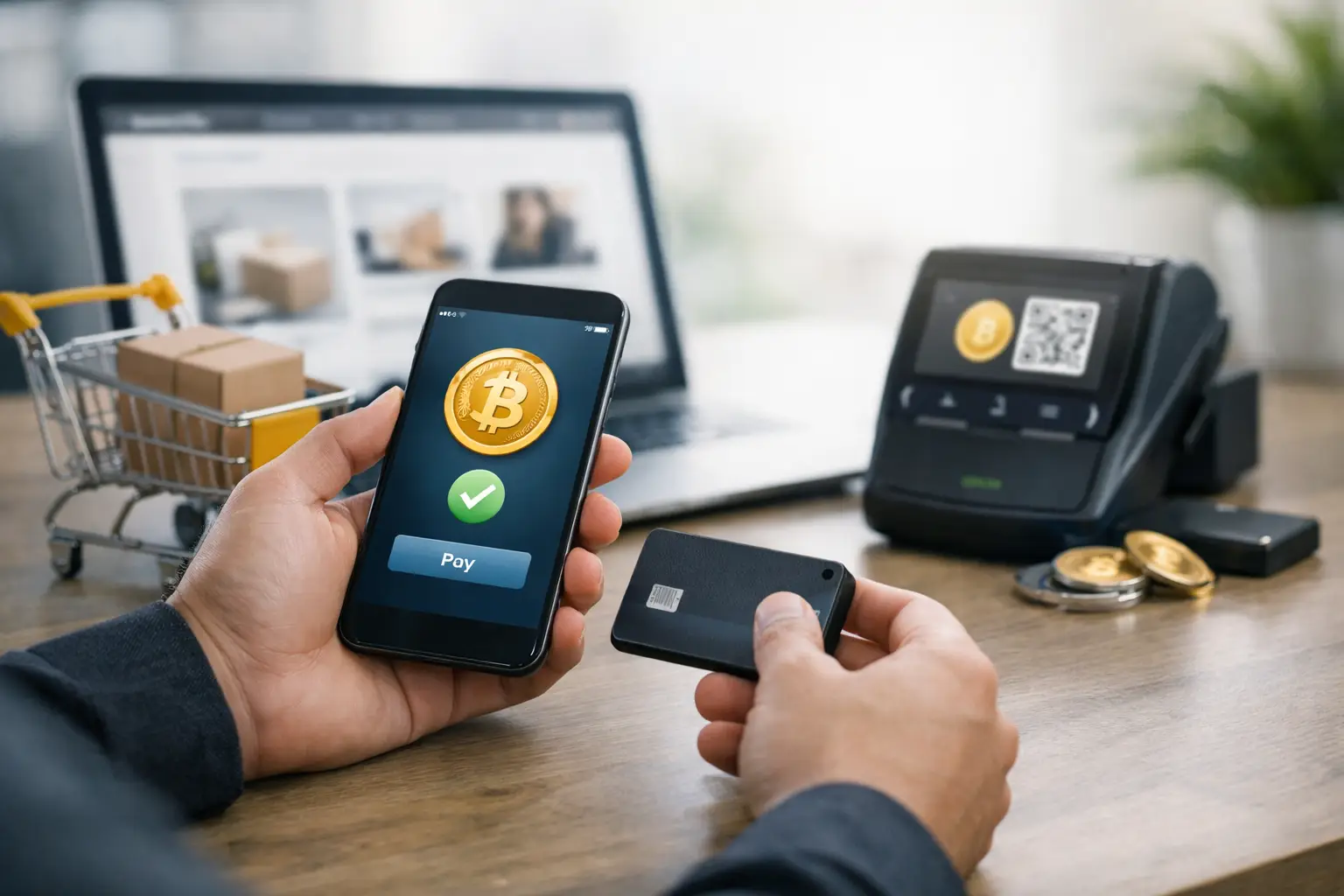
Most failed crypto payments are not caused by the coin itself. They happen because the buyer sends the wrong amount, uses the wrong network, or waits too long after the rate expires. That is why understanding how crypto checkout works matters. If you know what happens between selecting crypto at checkout and receiving payment confirmation, you reduce mistakes, avoid delays and keep your order moving.
For experienced online buyers, crypto checkout is not complicated. It is simply a payment flow built around a wallet transfer instead of a card processor. The main difference is that timing, network choice and exact payment amount matter more. Once you understand those points, the process is straightforward and fast.
How crypto checkout works at the payment stage
When you choose crypto as your payment method, the checkout system generates a payment request linked to your order. This usually includes the coin you selected, the exact amount due, a wallet address, and in some cases a QR code. The amount is often locked for a limited window because crypto prices move. If the market shifts, the value of the order in BTC, ETH or another asset can change quickly.
That rate lock window is there to protect both sides. You know exactly what to send at that moment, and the merchant knows what payment value to expect. If you pay within the time shown, the system can match your payment against the order without manual corrections. If you miss the window, the checkout may refresh with a new amount.
This is where buyers make the first avoidable mistake. They copy an amount from an old checkout screen, or they delay payment and send the expired figure. Even if the shortfall is small, the order may not clear automatically. In a specialist market where fast dispatch matters, accuracy at this stage saves time.
What happens after you send the payment
After you send the funds from your wallet, the transaction is broadcast to the blockchain network. At that point, the payment is not usually treated as final straight away. The system first waits for the transaction to appear on-chain, then for a set number of confirmations.
A confirmation means the transaction has been included in a verified block. Different coins move at different speeds. Some networks confirm quickly, while others can be slower during busy periods or if the network fee set by your wallet is too low. That does not always mean anything is wrong. It usually means the payment is still processing on the blockchain.
From the merchant side, the checkout system watches for three things: whether the payment was sent to the correct address, whether the exact amount arrived, and whether the transaction has reached the required confirmation threshold. Once those conditions are met, the order status can move from pending to paid.
In practical terms, this is why crypto orders can look slightly different from card orders. With a card, authorisation is usually instant. With crypto, there is a short verification phase built into the network itself. For many buyers, that trade-off is acceptable because it supports privacy, broader payment flexibility and fewer issues with card declines.
Why network choice matters
If you want a simple answer to how crypto checkout works, the network is one of the most important parts. A coin name alone is not always enough. Some assets exist across multiple networks, and sending on the wrong one can create delays or, in the worst case, failed recovery.
For example, if a checkout asks for payment on a specific chain, you need to send it on that chain, not just send the same token from any available route in your wallet. A fast-looking transfer option is not helpful if it is incompatible with the receiving address.
This is one of the reasons specialist retailers provide clear payment instructions. The checkout is designed to reduce friction, but the buyer still needs to read the details properly. Crypto gives you more control than a card payment. That also means more responsibility for getting the transaction right.
Wallets, fees and exact amounts
Your wallet is the tool that actually sends the payment. It can be a mobile wallet, desktop wallet, exchange wallet or hardware wallet. Each option works, but they do not all behave the same way. Some exchange wallets can add extra delay because withdrawals need internal approval or batching. Personal wallets often give you more direct control.
Fees matter as well. On most checkouts, the amount requested is the exact amount that must reach the receiving address. Network fees are normally paid on top by the sender, not deducted from the order value. If you try to subtract the fee from the payment itself, the merchant may receive less than expected.
That creates another common issue. A buyer sees a due amount, sends slightly under because they assume the fee is included, and then wonders why the order still shows pending. In crypto checkout, exact means exact unless the payment processor states otherwise.
How crypto checkout works for order processing
Once the system marks the payment as confirmed, the order can move into fulfilment. This is where crypto checkout ties into the wider operational side of the shop. Payment confirmation triggers picking, packing and dispatch workflows in the same way a cleared bank or card payment would. The difference is simply the method used to verify funds.
For a retailer focused on fast and discreet delivery, this stage matters as much as the payment itself. A clean crypto payment can support same-day processing if the order is placed within the cut-off and the blockchain confirms in time. A delayed or mismatched payment can push the order into the next processing cycle.
That is why buyers who value speed should not treat crypto as a last-minute payment method. If you are ordering late in the day, a slower network or an expired quote can affect dispatch timing. Crypto is efficient, but it still depends on the network and on the buyer following the instructions precisely.
Privacy, but not invisibility
A lot of buyers choose crypto for discretion. That makes sense, but it is worth being precise about what crypto does and does not do. Crypto checkout reduces reliance on traditional banking rails and keeps card details out of the transaction. That can be useful for buyers who prefer alternative payment methods and more control over how they pay.
At the same time, blockchain transactions are recorded on-chain. So the privacy model is different from cash, and different from card payments too. The practical benefit is payment flexibility and reduced exposure of personal banking details at checkout. The trade-off is that users need to understand wallet handling, addresses and networks.
For experienced buyers, that trade-off is usually reasonable. If you already value control, discretion and operational speed, crypto fits naturally. If you are careless with addresses or rely on guesswork, it becomes less convenient very quickly.
Common reasons a crypto checkout is delayed
Most delays come down to a small number of issues. The buyer sends after the rate window expires, uses the wrong network, underpays because of fees, or sends from a platform that processes withdrawals slowly. Sometimes the blockchain itself is congested. Sometimes the merchant is waiting for the final confirmation threshold before the order can be released.
None of this is unusual. It is simply how blockchain-based payment verification works. Good checkout systems are built to detect and reconcile normal payments automatically, but they still rely on the incoming transaction matching the order details.
If there is a problem, the fastest fix is usually basic: check the wallet address, check the network, check the amount sent, and check the transaction status. Buyers who keep a transaction ID and order reference at hand make support much faster if manual review is needed.
Why many specialist buyers prefer it
Crypto checkout remains popular in privacy-conscious e-commerce because it is direct, flexible and widely understood by the target customer. There are no card issuer declines, no need to re-enter sensitive banking details, and fewer payment barriers for buyers who already hold crypto. For businesses operating in specialist retail, it can also reduce friction when traditional payment methods are less practical.
That does not mean it is always the best option for everyone. If you are unfamiliar with wallets, or you need the reassurance of a card dispute process, crypto may feel less comfortable. But for buyers who prioritise discretion, speed and control, the process is efficient once you know the rules.
At Chemistry King, that practical value is exactly why crypto remains a useful checkout option for experienced customers across Europe. Get the network right, send the exact amount on time, and the rest of the process usually moves as it should.
The smartest way to use crypto at checkout is to treat it like a precise payment method, not an approximate one. A careful two-minute check before sending is often the difference between a fast confirmed order and an avoidable delay.