

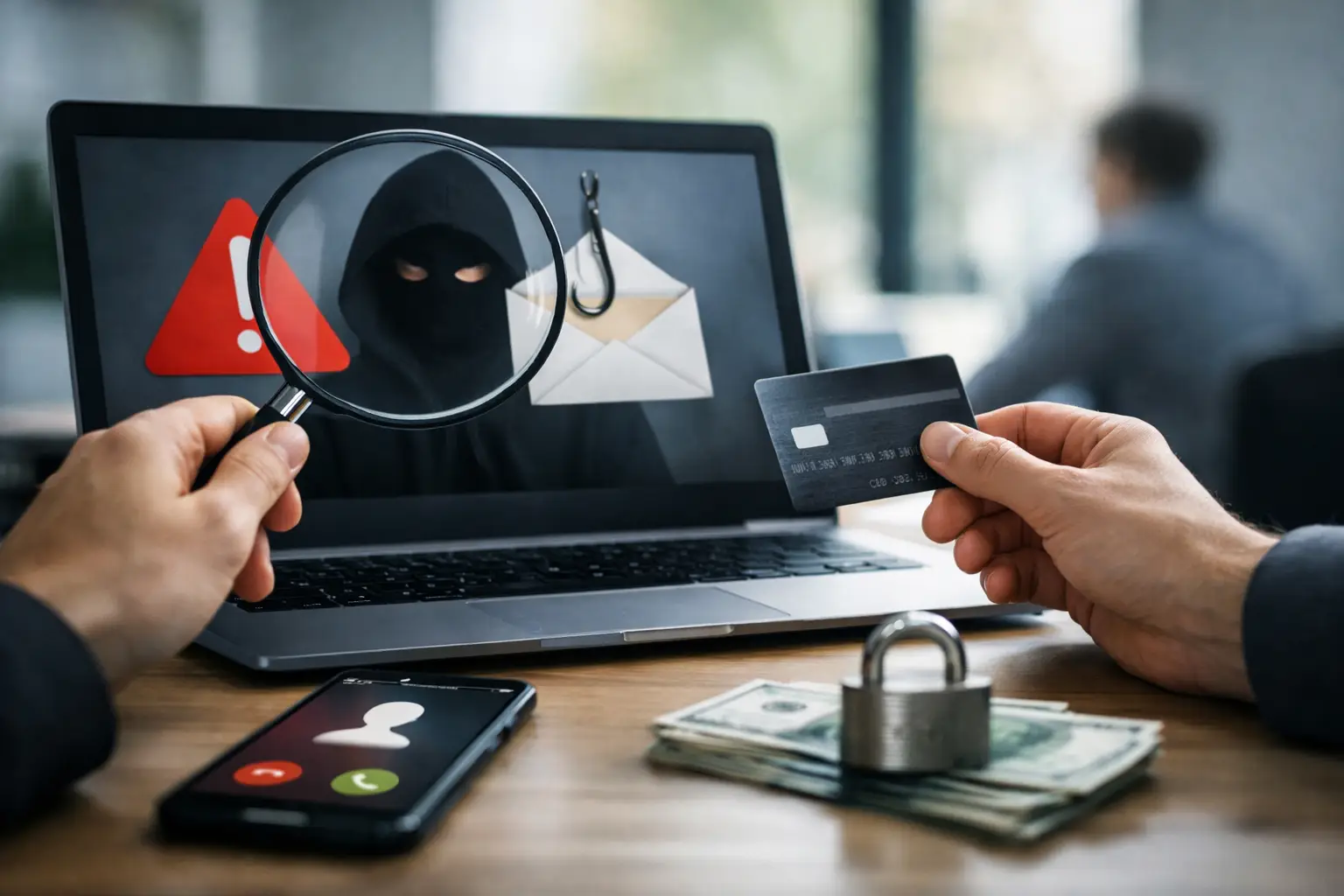
A convincing shop can be built in a weekend. A clean product page, a countdown timer and a few copied reviews cost very little to create. Losing funds, personal details or access to a payment wallet costs considerably more. The best ways to spot scams start before checkout, when you slow down long enough to test whether a seller behaves like a real business.
For specialist online categories, buyers should expect clear information, consistent communication and a traceable fulfilment process. Privacy matters, but it should never require blind trust. A legitimate retailer can be discreet while still being accountable.
Best ways to spot scams before placing an order
The strongest warning sign is not always a badly designed website. Some fraudulent sellers invest heavily in polished graphics because visual credibility is easy to fake. Look instead for the details that are harder to maintain over time: accurate contact information, consistent policies, believable stock information, clear dispatch terms and support that responds to specific questions.
Check whether the company name, contact route and trading information remain consistent across the website. A shop that uses one name in its footer, another in payment instructions and a third in customer messages deserves scrutiny. Generic contact forms are not automatically a problem, but a seller should offer a practical way to resolve order issues without forcing customers into public comments or unverified social media accounts.
Read delivery information carefully. “Fast delivery” is a useful promise only when it is supported by realistic processing cut-offs, destination details and tracking expectations. Be wary of vague claims such as “guaranteed next-day delivery worldwide” with no explanation of dispatch days, carrier limits or local restrictions. Genuine fulfilment has variables. Scam sites often promise certainty because they never intend to send anything.
Check the seller, not just the product page
Product photographs, descriptions and specifications can be copied in minutes. Search results and social accounts can be manipulated too. The more useful question is whether the seller has an operational history that makes sense.
Look for dated customer feedback from more than one place, but read it critically. A page containing only five-star reviews written in the same style is not reliable proof. Genuine feedback tends to include varied language, occasional practical complaints and comments about dispatch, packaging or customer service rather than only exaggerated praise.
Check for consistency in pricing. Very low prices can be legitimate during a genuine clearance period, but they should not sit beside implausible promises such as unlimited stock, instant dispatch and permanent discounts. In specialist markets, certified production, secure storage, compliant handling and reliable delivery all carry real costs. A price far below the rest of the market may mean missing stock, substituted goods or no delivery at all.
A legitimate business should also be clear about what it will and will not do. Watch for sellers that make reckless claims, ignore applicable rules or present every transaction as risk-free. Responsible retailers set boundaries. They do not use pressure to make buyers overlook them.
Treat payment pressure as a serious warning
Payment methods are not inherently suspicious. Cryptocurrency, for example, can be used by legitimate customers and retailers who value privacy and efficient payment processing. The issue is how the seller handles the transaction.
Never accept a payment instruction that changes without explanation. If the checkout gives one wallet address, then a message asks you to send funds to a different address, stop and verify through an established support channel. Fraudsters commonly impersonate stores in direct messages, Telegram groups and copied email threads.
Be particularly cautious when a seller insists on payment outside its normal checkout process. Requests to send funds to a personal account, use a “temporary” wallet, pay a release fee or make a second transfer to unlock a parcel are classic fraud patterns. Legitimate businesses do not keep inventing new charges after payment because a supposed courier, customs agent or finance team has appeared.
Before sending any irreversible payment, check the full order total, payment reference and receiving address character by character. Do not rely on a screenshot. Clipboard-hijacking malware can replace copied wallet addresses, and fake support accounts often use names that differ by a single character.
Look closely at communication quality
Fast replies alone do not prove anything. A scammer can respond immediately with a prepared script. What matters is whether the reply addresses your actual question and matches the information already published by the business.
Ask a straightforward question about stock status, dispatch timing or an existing policy. A genuine support team should provide a direct, consistent answer. If every reply pushes you towards urgent payment, ignores your question or moves the conversation to a new account, step back.
Poor grammar is not enough to label a seller fraudulent, especially when businesses serve customers across Europe. However, repeated contradictions are different. Treat it as a warning if an operator cannot explain delivery terms, gives conflicting product information or keeps changing their story about where an order is being sent from.
Watch for artificial urgency. “Only three units left” can be a valid stock notice, but a timer that resets every time you refresh the page is simply pressure. Scams rely on rushed decisions. Established sellers rely on clear terms, stock management and service.
Protect your details as carefully as your money
A fraudulent shop may be trying to collect data rather than payment. Avoid providing more information than is necessary to process an order and deliver it. A retailer does not need banking passwords, recovery phrases, remote access to your device or a photograph of unrelated personal documents to confirm a standard purchase.
Use a unique password for any account you create. If the site supports two-factor authentication, enable it. Keep order confirmations and payment records, but do not post transaction references, full addresses or wallet information in public review sections.
Check that the web address is correct before logging in or paying. Fake domains often use minor misspellings, extra hyphens or a different ending that can be missed on a mobile screen. Save the genuine site address as a bookmark rather than following links in unsolicited messages.
Your device matters too. Keep the browser and operating system updated, avoid ordering through public Wi-Fi and do not install unknown “tracking” applications sent by a seller. Tracking should be accessible through a standard order page or a recognised carrier process, not through a file sent in a chat.
Know when to walk away
There is no obligation to complete a purchase because you have spent time researching it. If something feels inconsistent, pause. A legitimate seller can answer questions later; a scam only works if it keeps control of the moment.
Walk away immediately when you see several warning signs together: a newly created-looking site, copied reviews, implausible discounts, payment instructions sent through private messages, no usable support route and demands for extra funds after checkout. One issue may have an innocent explanation. A pattern rarely does.
If you have already paid and suspect fraud, do not send further funds to “recover” the first payment. Preserve screenshots, order details, messages and transaction records. Contact the payment provider or platform through its official route, secure any affected accounts and report impersonation accounts where they appear. Acting quickly can limit further loss, even where a payment itself cannot be reversed.
The best protection is a disciplined buying process: verify the business, read the dispatch terms, use only the stated checkout route and refuse pressure. A reliable retailer should make those checks easier, not make you feel guilty for carrying them out.