

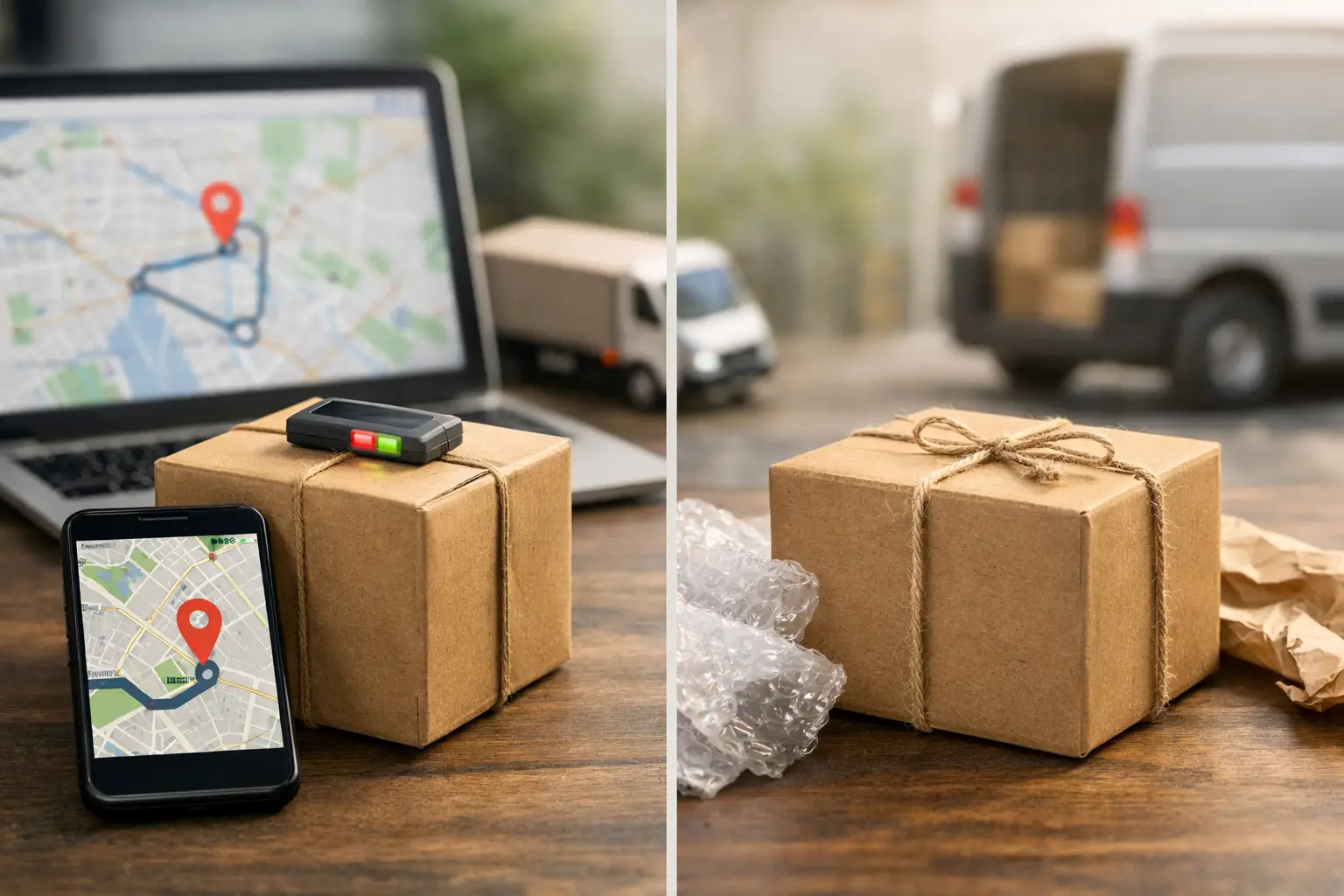
A parcel is only fast if you know where it is and can act when something changes. That is the practical difference in tracked versus untracked shipping. One service gives you a reference trail from dispatch to delivery events; the other is usually cheaper and simpler, but offers limited proof once it enters the postal network.
For customers ordering specialist goods within Europe or to Great Britain, delivery confidence matters as much as dispatch speed. A dependable seller can process an order promptly, but the carrier, destination, local delivery conditions and any required compliance checks still shape the final delivery time. Choosing the right shipping option starts with understanding what tracking can, and cannot, do.
What tracked shipping actually provides
Tracked shipping assigns a parcel reference number that records scan events as it moves through the carrier network. Depending on the service, updates may show collection, departure from a sorting facility, arrival in the destination country, transfer to a local carrier, an attempted delivery and final delivery confirmation.
This creates a clear operational advantage. If a parcel appears delayed, the tracking history shows whether it is still moving, waiting at a depot, held for an address issue or awaiting a delivery attempt. The buyer and sender have a shared reference point rather than relying on estimates alone.
For higher-value orders, tracking also provides evidence that the parcel was accepted by the carrier and, where available, delivered to the stated address. That evidence can be useful if a delivery query needs to be raised. It does not automatically guarantee compensation, however. Compensation depends on the carrier’s terms, the service level selected and how a claim is assessed.
Tracked services often include notifications by email, SMS or an app. These are convenient, particularly if the recipient needs to be available for a signature or wants to redirect a delivery through the carrier’s available options. Notifications should be treated as updates, not guarantees. Delivery windows can change because of weather, local workload, weekends, public holidays or a missed scan.
Tracking does not mean constant live location
Many buyers expect tracking to function like a map-based courier service. Most postal tracking does not work that way. A parcel may only update when it is scanned at key handover points, so there can be a quiet period between events without anything being wrong.
International parcels are especially likely to show gaps. A shipment can leave one network, travel between countries and wait for a receiving carrier to process it before the next update appears. That is normal. The useful question is whether the latest scan is consistent with the carrier’s stated transit timeframe, not whether every stage has appeared instantly.
What untracked shipping leaves open
Untracked shipping is usually a standard postal option without a public tracking reference or detailed delivery history. It can be a sensible choice for low-value, non-urgent items when the recipient accepts less visibility in exchange for a lower delivery charge.
The compromise is straightforward: once the parcel has been dispatched, there is little reliable information available until it arrives. If it takes longer than expected, neither party can easily identify whether it is moving slowly, awaiting delivery, incorrectly addressed or genuinely lost.
Untracked post can also make delivery disputes more difficult. A sender may retain proof of posting, but that does not necessarily prove receipt by the customer. Equally, a customer has no scan trail to check before contacting support. This adds uncertainty at exactly the point where clear information matters most.
For a time-sensitive order, untracked shipping is rarely the strongest option. Saving a small amount on postage may not be worthwhile if the parcel cannot be located, a delivery attempt is missed or an issue needs to be investigated. It is best viewed as an economy service, not a service with the same level of accountability as tracked delivery.
Tracked versus untracked shipping: the key differences
The decision is not simply about price. It is about the level of control and evidence needed for a particular order.
Tracked shipping is usually the better fit when the order value is significant, the recipient needs delivery updates, or the destination has a more complex handover between postal networks. It gives both sides visibility and reduces unnecessary support queries. It is also useful for customers who may be away from home during normal delivery hours and need to plan around an expected arrival.
Untracked shipping can suit routine, low-value purchases where delivery timing is flexible. It may be available at a lower cost and can be perfectly adequate when the buyer understands that updates and proof of delivery are limited. The trade-off should be accepted before checkout, not after a parcel takes longer than expected.
Neither option removes the need for accurate order details. A tracking number cannot correct a missing flat number, an outdated postcode, an incorrect recipient name or a phone number that cannot receive carrier notifications. Address accuracy remains one of the strongest safeguards against delivery problems.
International delivery and GB orders
Shipping between European countries, and shipping to Great Britain from Europe, can involve several carrier handovers. This is where tracked delivery becomes particularly valuable. The tracking record may show the point at which responsibility passes from the origin carrier to a UK delivery partner, helping to explain why an update changes format or pauses.
Cross-border orders may also be subject to lawful customs, tax or import procedures. Tracking does not bypass these processes, speed up a decision or guarantee that an item will be accepted for import. Customers should always ensure that an intended purchase and import are lawful in their destination, and should provide any information legitimately requested by the carrier or relevant authority.
A sensible expectation is that international transit estimates are estimates. Border processing, seasonal volume and local delivery capacity can add time. If a tracked parcel has not updated for a short period, avoid assuming it has disappeared. Check the latest event, compare it with the stated service timeframe and contact the carrier or sender only when the delay is outside the normal window.
Privacy, discretion and delivery information
Tracking is sometimes mistaken for a loss of privacy. In practice, the tracking page normally shows only operational parcel data, such as status, broad location and delivery event. It does not give the public access to item contents.
The real privacy consideration is data accuracy. Use a delivery address you are authorised to use, make sure the recipient details are correct and avoid entering unnecessary information into delivery notes. If the carrier offers a collection point or authorised redirection service, use it only where permitted and appropriate for the shipment.
Discreet handling should never mean misleading a carrier, falsifying a declaration or trying to circumvent legal checks. Professional delivery depends on accurate documentation, lawful goods and a clear chain of responsibility. Those standards protect the customer as much as the sender.
How to choose the right delivery option
Start with the value of the order and the cost of uncertainty. If replacing the item would be frustrating or expensive, choose tracked shipping. If the order is needed by a particular date, tracking is the practical default because it allows you to see progress and respond to an attempted delivery.
Next, consider the destination. A domestic parcel going to a familiar address may be suitable for a basic postal service when timing is not critical. A cross-border delivery, a remote address or a location with inconsistent local delivery is better served by a tracked option.
Finally, read the service description carefully. “Tracked”, “signed”, “insured” and “express” are not interchangeable labels. A service may be tracked without requiring a signature, signed without detailed in-transit scans, or faster without offering greater compensation. Select the feature that addresses your actual concern rather than assuming the most expensive option covers every risk.
If a parcel appears delayed
With tracked shipping, check the latest scan first. An “attempted delivery” status may mean the parcel is ready for collection or that a redelivery can be arranged. A “label created” event may mean the sender has prepared the shipment but the carrier has not yet recorded its first collection scan. A processing or transit event usually means patience is still the right response.
Keep the order reference, tracking number and delivery address available when contacting support. Clear information speeds up any investigation. With untracked shipping, allow the full stated delivery window before raising a query, as there may be no scan data to assess before then.
The strongest delivery choice is the one that matches the order’s value, urgency and destination. For most customers who want certainty rather than guesswork, tracked shipping is the sensible standard: it gives you a record, a route to follow and a clearer basis for action if the parcel does not arrive as expected.